More than a sequence of dates: a chronological journey through Jamini Bhushan Ray's education,
medical career, scholarship, institution-building, philanthropy, public associations, and the
continuing life of the institutions he created.
The chronology begins with the formation of a physician and Sanskrit scholar, then follows the
decisions and public work that helped reshape Ayurvedic education in twentieth-century Bengal.
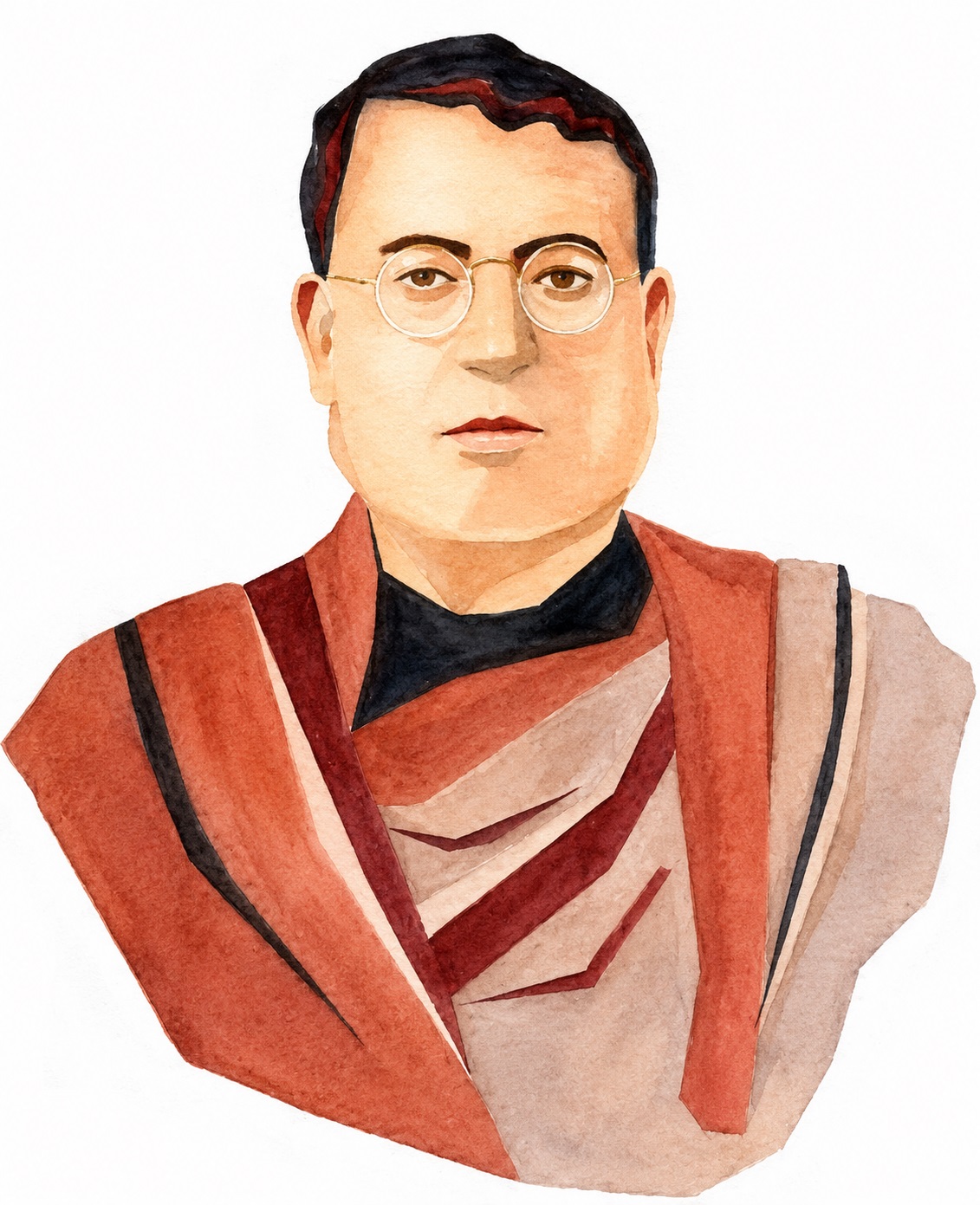
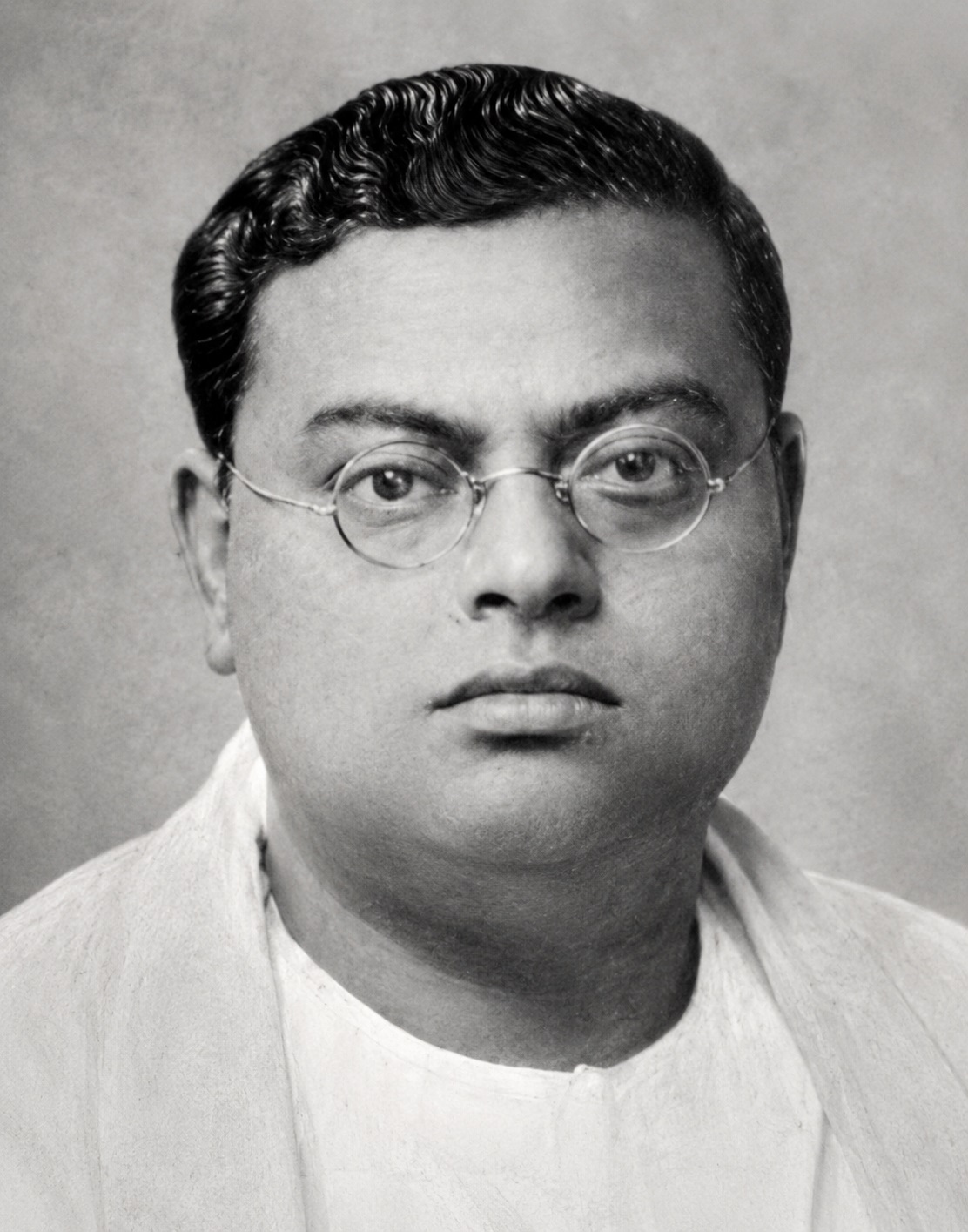
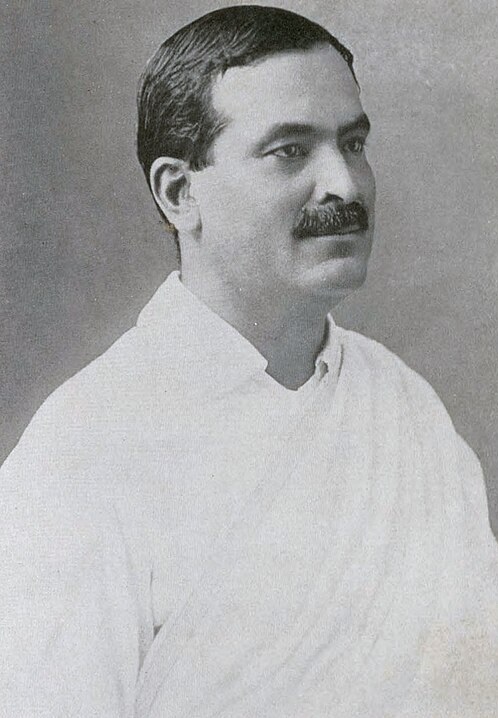
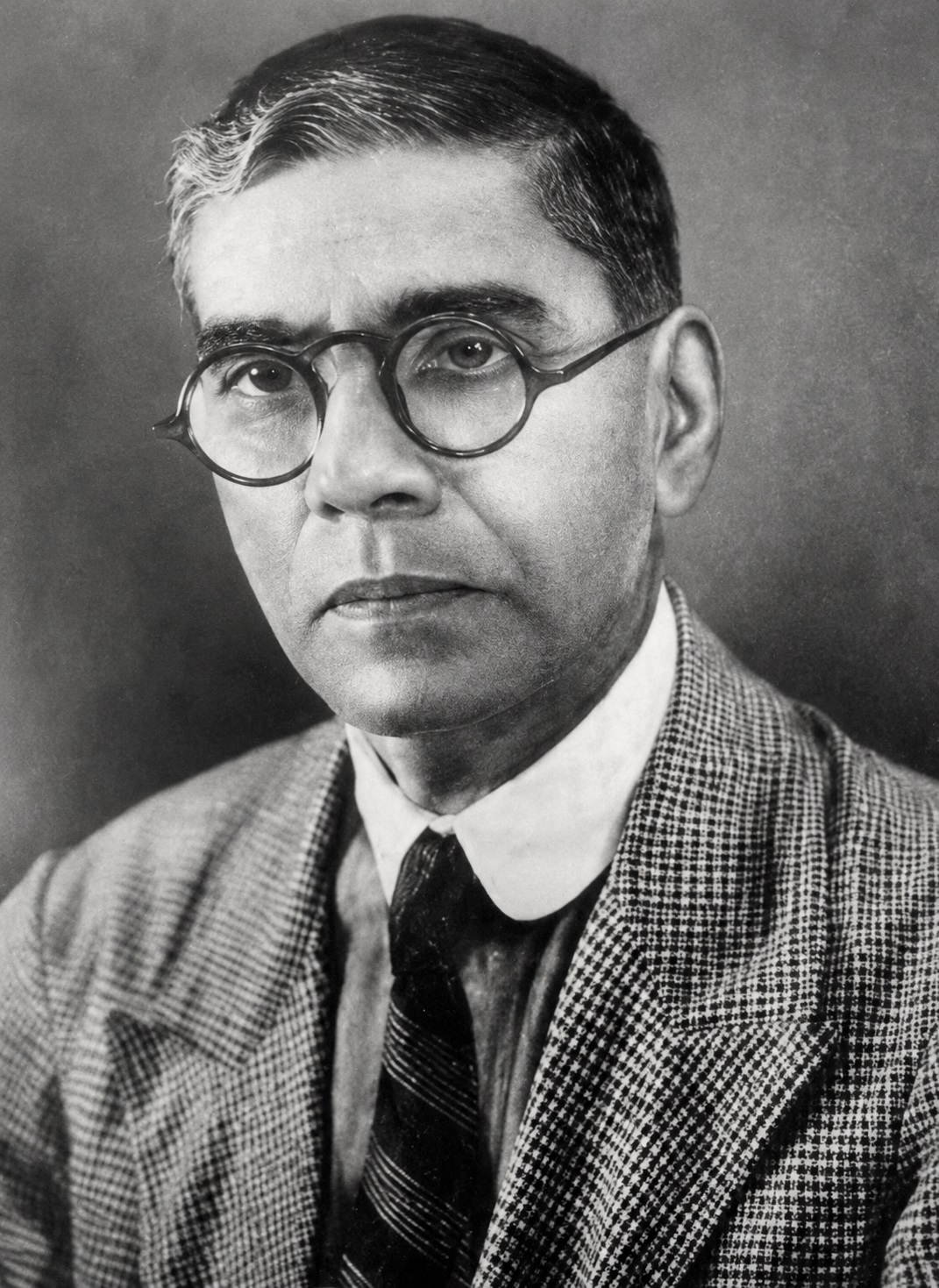
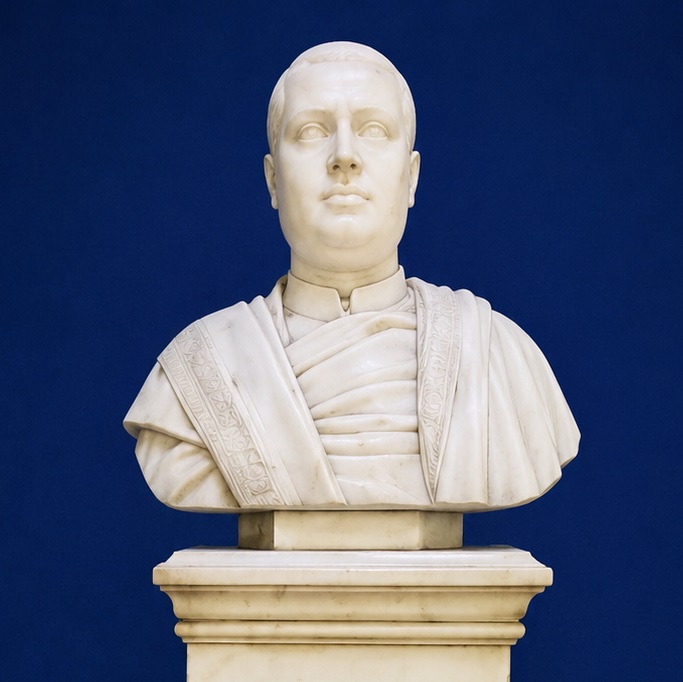
Portrait
Jamini Bhushan Ray
01
1879–1905
Formation
From rural Khulna to Calcutta's Sanskrit College and Medical College, Ray's education brought
together two intellectual traditions that would later define his work.
1 July
Beginnings
Born in Poyogram, Khulna
Jamini Bhushan Ray was born in Poyogram village in the Khulna district of the Bengal
Presidency. His father, Panchanan Ray, was an Ayurvedic physician known by the honorific
Kavichintamani.
Ayurveda therefore belonged to Ray's family environment long before it became the central
work of his adult life.
Education
Calcutta
Two systems of learning
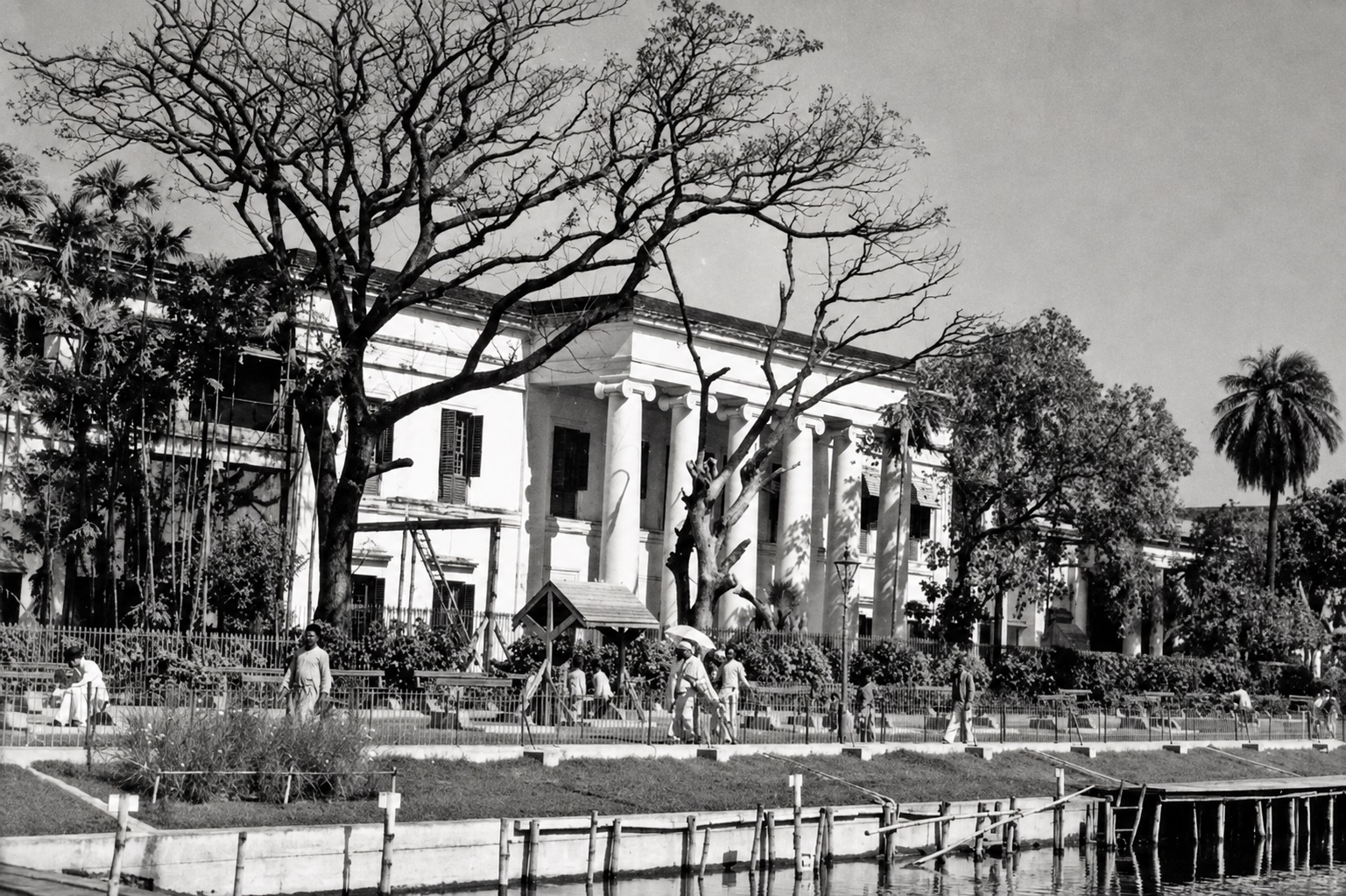
After his early education, Ray moved to Calcutta, attended South Suburban School in
Bhowanipore, and later studied Sanskrit at Sanskrit College.
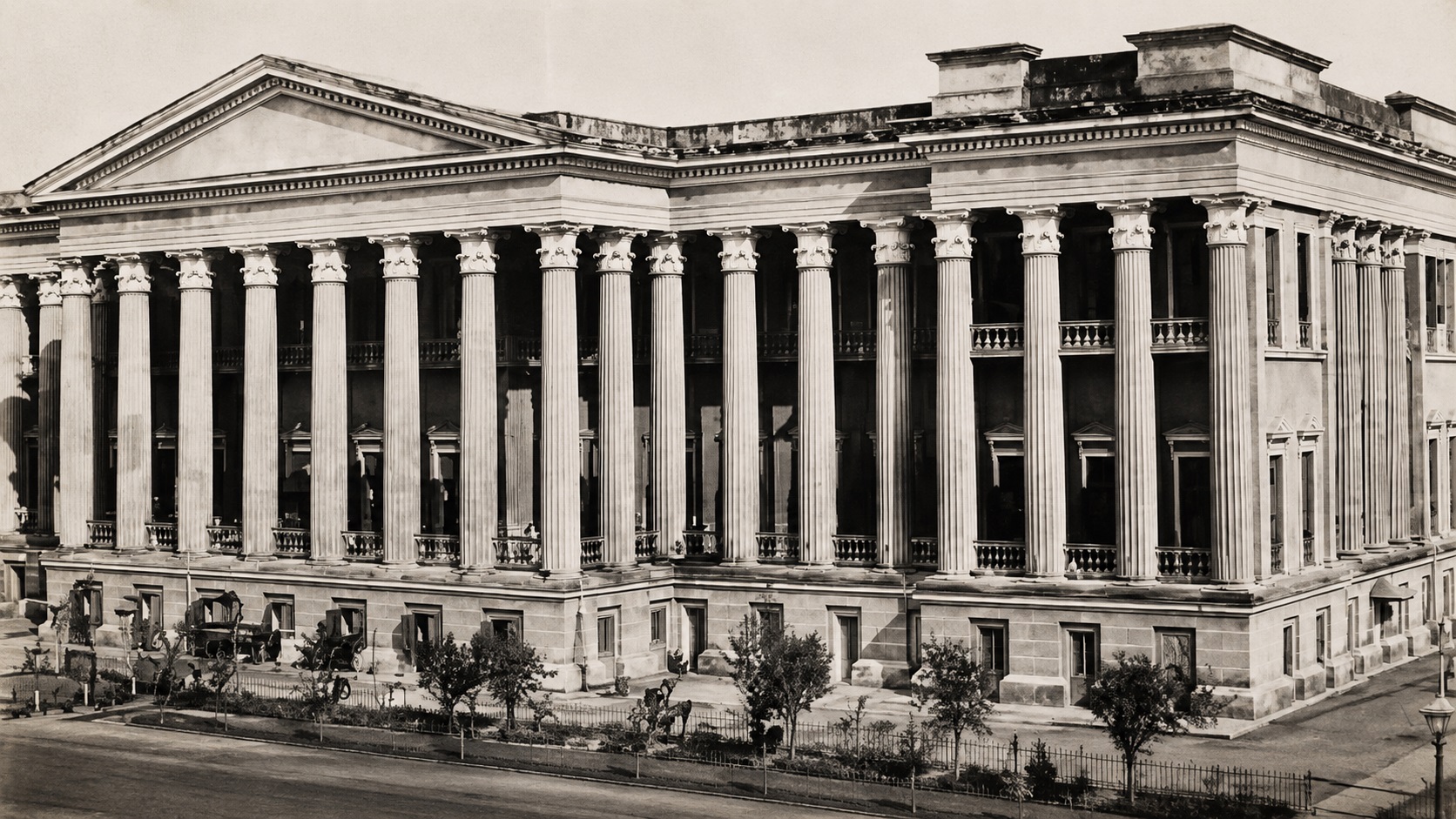
He pursued advanced Sanskrit studies while simultaneously studying Western medicine at
Calcutta Medical College and continuing his Ayurvedic education under his father.
Education
Sanskrit College, Calcutta
Medical training
Calcutta Medical College
Medical qualification
M.B. degree and gold medal
Ray graduated with the Bachelor of Medicine degree from Calcutta Medical College in 1905
and received a gold medal.
By this point he had acquired formal Western medical training while also building a deep
grounding in Sanskrit scholarship and Ayurveda.
02
After 1905–1914
Choosing Ayurveda
Medical qualification did not lead Ray into government service. Instead, his career moved
increasingly toward Ayurveda, clinical practice, scholarship, pharmaceutical work, and
medical education.
After 1905
A defining choice
Western-trained physician, Ayurvedic vocation
Following graduation, Ray practised obstetrics and gynaecology before devoting himself
fully to Ayurveda. Although opportunities existed for government medical service, he chose
instead to pursue Ayurvedic practice.
He completed further Ayurvedic training under Mahamahopadhyay Bijoy Ratna Sen and later
served as Kaviraj at the Bowbazar Marwari Hospital.
Scholarship
Kumar Tantra
Ray's Sanskrit medical writings formed part of his wider effort to present Ayurveda as
a systematic and intellectually rigorous medical discipline.
The surviving 1913 title page of Kumar Tantra, concerned with the care and
diseases of children, provides an early material record of this scholarly programme.
Publication · 1913Kumar Tantra
03
1915–1919
From Public Leadership to Institution
Ray's national advocacy for a more systematic and scientifically engaged Ayurveda was
followed almost
immediately by institution-building in Calcutta. Between 1915 and 1919, an intellectual
programme became
a college, charitable hospital, and eventually a public trust.
Madras
Seventh All-India Ayurvedic Conference
A national platform for reform
Ray was elected president of the Seventh All-India Ayurvedic Conference held in Madras. His
presidency
reflected his growing national stature among physicians and scholars concerned with the
future of
Ayurvedic medicine.
In his presidential address he argued that Ayurveda should preserve its classical foundations
while
embracing scientific education, clinical training, anatomy, surgery, and coordinated
institutional
development.
Contemporary pressBehar Herald
Report published 1 April 1916
Documentary record
East, West, and a “scientific spirit”
Contemporary coverage described Ray as a physician who combined Eastern and Western
medical
learning and recorded his appeal for the advancement of Ayurveda in a “truly scientific
spirit”.
The conference marks the point at which the strands already visible in Ray's life —
Sanskrit
scholarship, Western medical education, Ayurveda, institutional thinking, and public
service —
came together on a national stage.
Institution-building
Ashtanga Ayurveda Vidyalaya
Ray founded the Ashtanga Ayurveda College and Hospital in Calcutta in 1916, transforming
his ideas
about Ayurvedic education into a permanent institutional programme.
The college sought to replace dependence on individual apprenticeship with organised
teaching by
specialist instructors, a structured curriculum, practical clinical training, and an
attached
charitable hospital.
Founded10 February 1916
The institution was established by Jamini Bhushan Ray.
Formal inauguration14 April 1916
1 Baishakh 1323 BS.
First home29 Fariapukur Street
A rented house in north Calcutta.
Opening scale12 students · 3 teachers
Tuition, board, and lodging were provided without charge.
The experiment
Ayurveda would be taught as an organised medical discipline — through specialist teaching,
clinical experience, and institutional public service.
Early model
Education + clinical service
A college with a charitable hospital
The institution combined teaching with free treatment for poor patients. Contemporary
accounts record
that the charitable dispensary was treating more than 100 patients daily as the college began
to
establish itself.
Ray also introduced practical instruction and facilities intended to broaden Ayurvedic
education,
including a medical museum and chemical laboratory.
Public trust
From founder's college to public institution
In 1919 Ray reorganised the institution under a public trust, reinforcing his intention that
the
college should function as a public educational and charitable institution rather than as his
private
property.
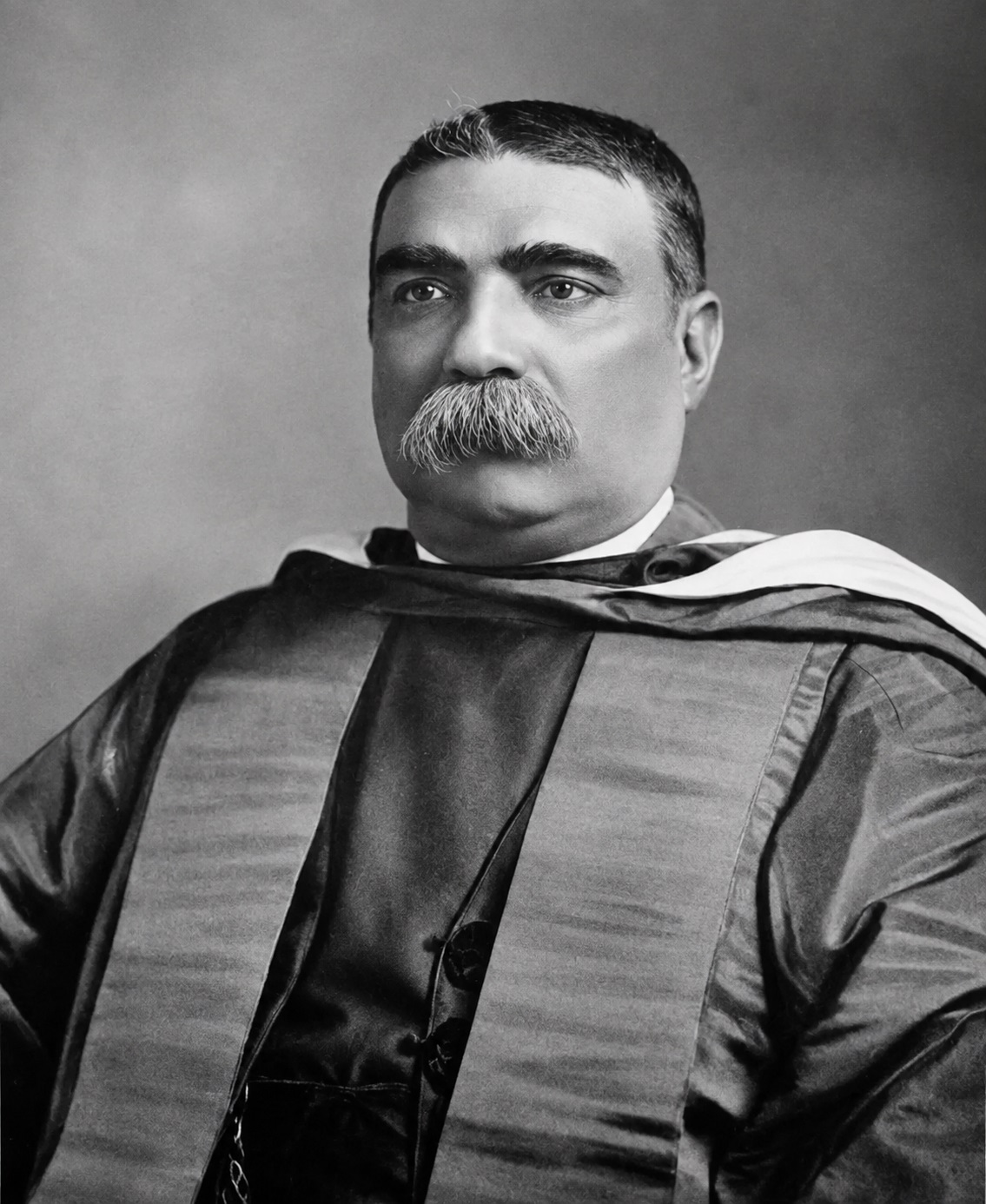
Board of TrusteesSir Ashutosh Mukherjee
First Chairman
Working CommitteeGananath Sen
First Chairman
Institutional continuity
A structure beyond one individual
Sir Ashutosh Mukherjee became the first Chairman of the Board of Trustees, while
eminent
Ayurvedic physician Gananath Sen chaired the first Working Committee.
Ray continued as Principal. The new governance structure gave the institution an
organisational
existence capable of surviving beyond its founder.
Next era1920–1927
Scholarship, government inquiry, Gandhi's visit, Ray's final benefactions, and the permanent
campus.
04
1920–1927
Scholarship, Recognition & Permanence
The final years of Ray's life brought together scholarship, public scrutiny, philanthropy,
and institution-building. His writings circulated as medical texts, his views entered a major
government inquiry, Gandhi publicly engaged with the institution, and the permanent college
survived its founder.
Scholarship in print
Ayurveda as a written medical discipline
Ray's medical writings formed part of the same programme as his college: to organise,
teach, preserve, and examine Ayurvedic knowledge systematically.
His works addressed specialist fields including diagnosis, toxicology, paediatrics,
obstetrics, and diseases of the ear, nose, throat, and mouth.
Medical text · 1920Roga Binishchaya
Diseases — Their Origin and Diagnosis
Medical text · 1920A Manual of Toxicology
A specialist work in Ayurvedic toxicology
1921–23
Government inquiry
Evidence before the Madras Committee
During the Madras Presidency's inquiry into indigenous systems of medicine, Ray submitted
written evidence and was interviewed in Calcutta by the touring subcommittee. The
committee
also inspected the Ashtanga Ayurvedic College.
Government record · 1923Committee on the Indigenous Systems of Medicine
Ray's evidence
Research, diagnosis, and the revival of surgery
The report identified Ray and Gananath Sen as practitioners proficient in both Ayurveda
and Western medicine and cited their evidence extensively in discussions of diagnosis
and treatment.
Ray argued that Ayurvedic surgery had declined partly because Sanskrit medical texts
had become inaccessible and competent teachers were scarce. He nevertheless maintained
that the discipline could be revived through research and systematic investigation.
He described diagnosis as combining sensory observation and questioning of the patient
with attention to constitution, environment, season, and the progression of disease.
6May
Institutional recordGandhi and Sengupta
A later commemorative page preserving two major milestones in the institution's
transition to its permanent home.
Raja Dinendra Street
Gandhi lays the foundation stone
On 6 May 1925, Mahatma Gandhi laid the foundation stone of the institution's new
permanent campus at Raja Dinendra Street.
His address went beyond ceremonial praise. Gandhi discussed Ayurveda and Unani medicine
in relation to scientific inquiry, medical ethics, public service, and the danger of
exaggerated claims.
The occasion placed Ray's institution inside a wider national debate about indigenous
knowledge, modern science, and the responsibilities of medical practitioners.
6 May 1925From rented premises toward a permanent institutional home.
11August
1879–1926Jamini Bhushan Ray
Final year
The founder dies before completion
Jamini Bhushan Ray died in Calcutta on 11 August 1926 at the age of forty-seven,
before the new permanent institutional building was completed.
His philanthropy had already committed substantial personal resources to the college.
His bequests included property, research facilities, a medical museum, and the
Patipukur garden estate.
The day before his death₹200,000
Samsad Bangali Charitabhidhan records that Ray donated ₹200,000 to
Ashtanga Ayurveda Vidyalaya on the day before he died.
Institutional continuity
The institution survives its founder
Construction continued after Ray's death. In June 1927, the new hospital building at
Raja Dinendra Street, with fifty charitable beds, was formally inaugurated by
Deshapriya Jatindra Mohan Sengupta.
Inauguration · 1927Jatindra Mohan Sengupta
The transition
The founder passed away. The institution continued.
The opening of the permanent campus demonstrated that Ray had succeeded in creating
something larger than a personal medical practice or privately owned school:
an institution capable of carrying his programme forward without him.
Next era1927–1964
Patipukur, successive institutional leadership, the Silver Jubilee, hospital expansion,
and the long transition from private trust to government administration.
05
1927–1964
Legacy in Motion
After Ray's death, the institution entered a long period of succession, expansion, and
adaptation. New leaders carried the college forward, the Patipukur bequest became a major
clinical centre, national figures marked institutional milestones, and increasing financial
pressures eventually led to transfer to the Government of West Bengal.
1929–42
Institutional succession
Leadership after the founder
The institution continued under successive Boards of Trustees after Ray's death. During the
chairmanship of Sir Manmatha Nath Mukherjee, hospital facilities continued to expand.
Institutional leadershipSir Manmatha Nath Mukherjee
Chairman during a period of hospital expansion
Hospital developmentNellie Sengupta
Inaugurated the institution's separate female ward
The exact date of the female-ward inauguration is not assigned here; the surviving
institutional record places the event within this later phase of expansion.
A bequest becomes a hospital
Patipukur T.B. Hospital
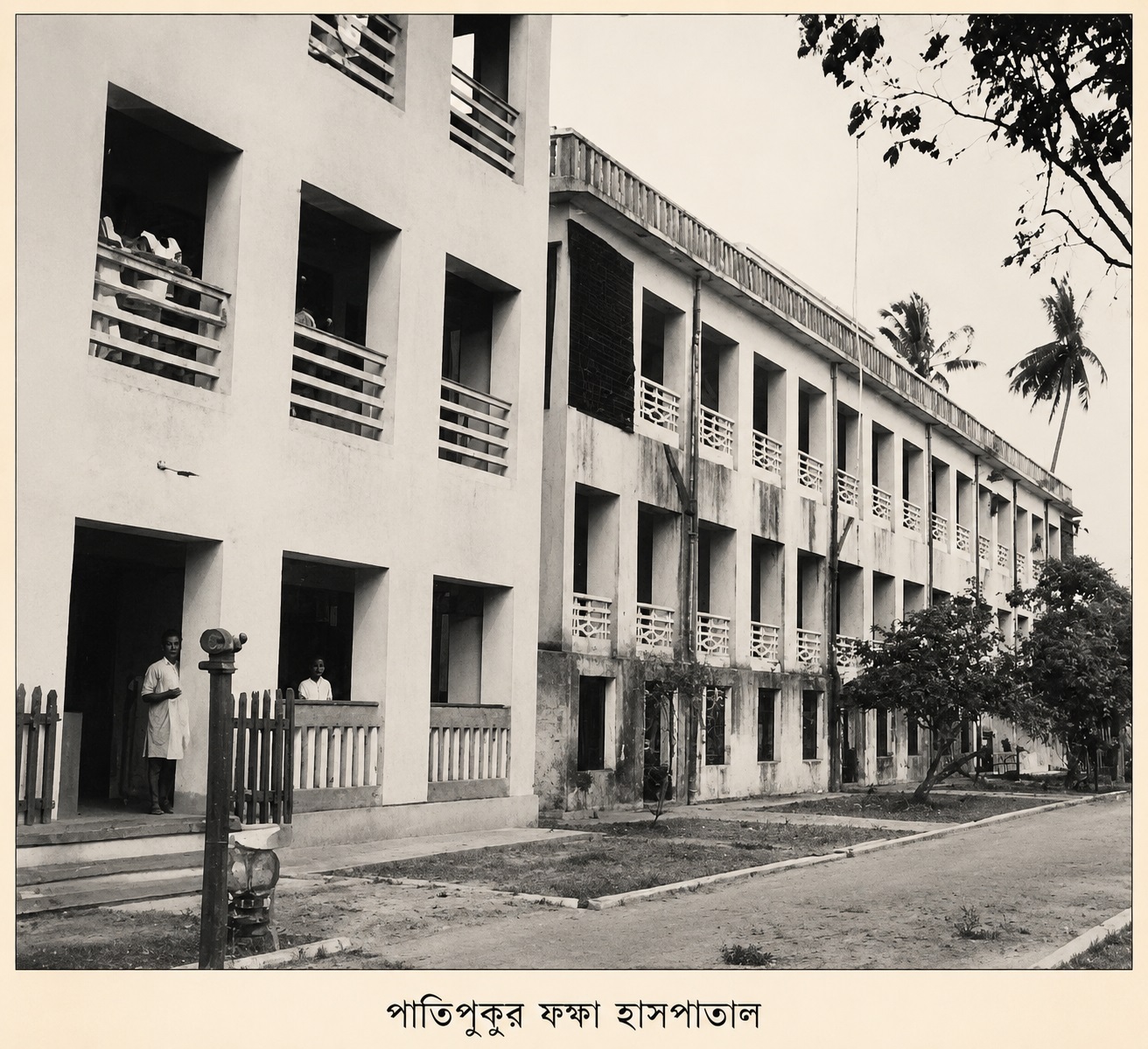
Approximately seven years after Ray's death, his suburban property at Patipukur became
the site of a tuberculosis hospital. The institution originated on land that Ray had
bequeathed for institutional purposes.
Foundation stoneDr. Bidhan Chandra Roy
Physician and statesman
Philanthropy → infrastructure
A private bequest became a public clinical institution.
The Patipukur T.B. Hospital was established as a sixty-bed tuberculosis facility.
Bidhan Chandra Roy laid its foundation stone.
This development extended Ray's legacy beyond the college at Raja Dinendra Street:
property he had given to the institution was now supporting a specialised hospital.
Silver Jubilee
Twenty-five years after the founding
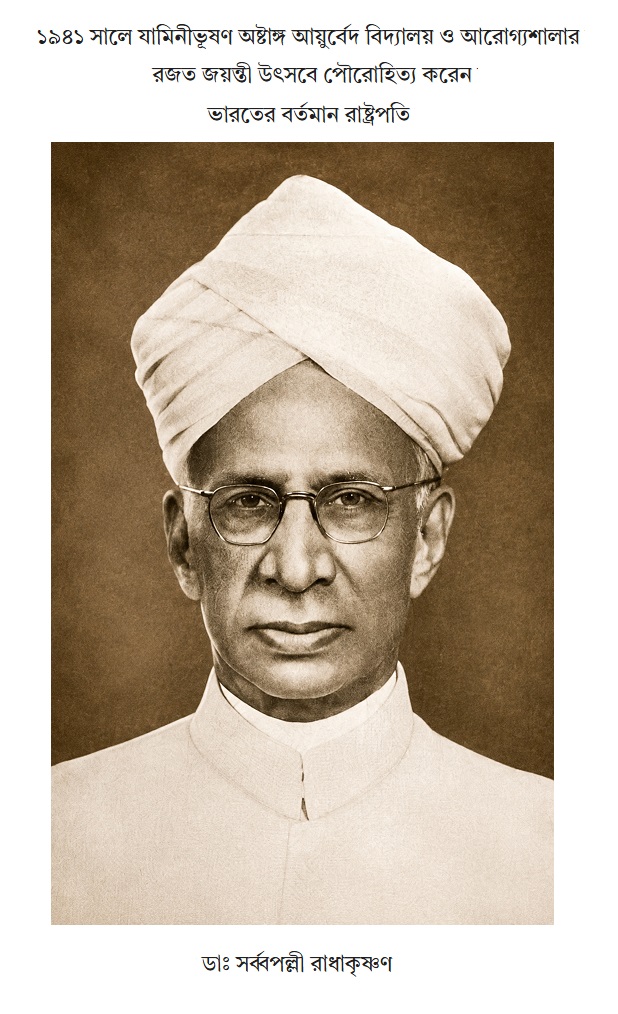
The institution marked its Silver Jubilee in 1941. The celebrations were presided over by
Sarvepalli Radhakrishnan, then Vice-Chancellor of Banaras Hindu University and later
President of India.
Fifteen years after Ray's death, the college was no longer an experimental school
dependent upon its founder. Its Silver Jubilee demonstrated institutional survival,
continuity, and wider public standing.
Radhakrishnan's presence connected the anniversary with a broader world of Indian
education and public life.
1943–50
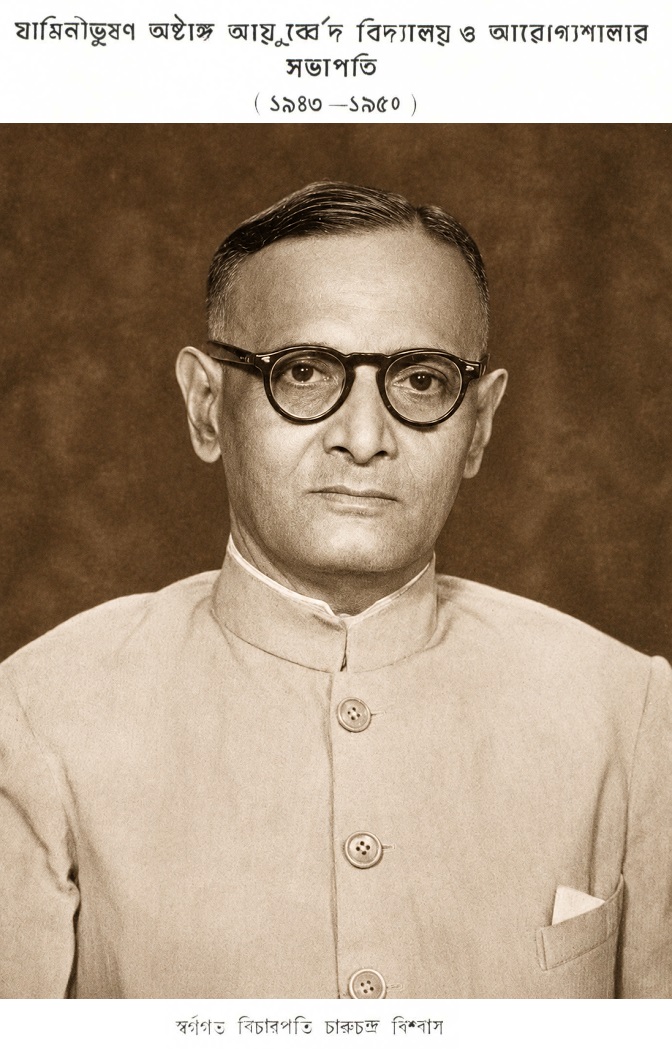
Board of TrusteesCharu Chandra Biswas
Chairman, 1943–1950
Toward public administration
A changing institutional environment
Charu Chandra Biswas, former judge of the Calcutta High Court and later Vice-Chancellor
of Calcutta University, served as Chairman of the Board of Trustees during the
institution's post-war period.
The 1964 institutional retrospective later credited him with helping facilitate
negotiations connected with the eventual transfer of the institution to state
administration.
Patipukur expands
A new three-storey hospital building
In 1951, a new three-storey building at Patipukur was inaugurated by Harendra Coomar
Mookerjee, Governor of West Bengal.
Inauguration · 1951Harendra Coomar Mookerjee
Governor of West Bengal
Continuing the Patipukur story
The new building represented another stage in the development of the hospital created
from Ray's Patipukur bequest.
What began as a philanthropic transfer of property had, over two decades, developed
into a substantial clinical branch of the institution.
Early 1960s
Institutional pressure
Growth brought financial strain
By the early 1960s, the Trust Board faced increasing difficulty maintaining the expanding
college, hospitals, and associated charitable services.
Discussions with the Government of West Bengal eventually produced an agreement under
which the institution would pass from private trust management to state administration.
1August
State transition
From charitable trust to State Ayurvedic College
With effect from 1 August 1964, the management and maintenance of Jamini Bhushan
Ashtanga Ayurveda Vidyalaya, together with Patipukur T.B. Hospital, were transferred
to the Government of West Bengal.
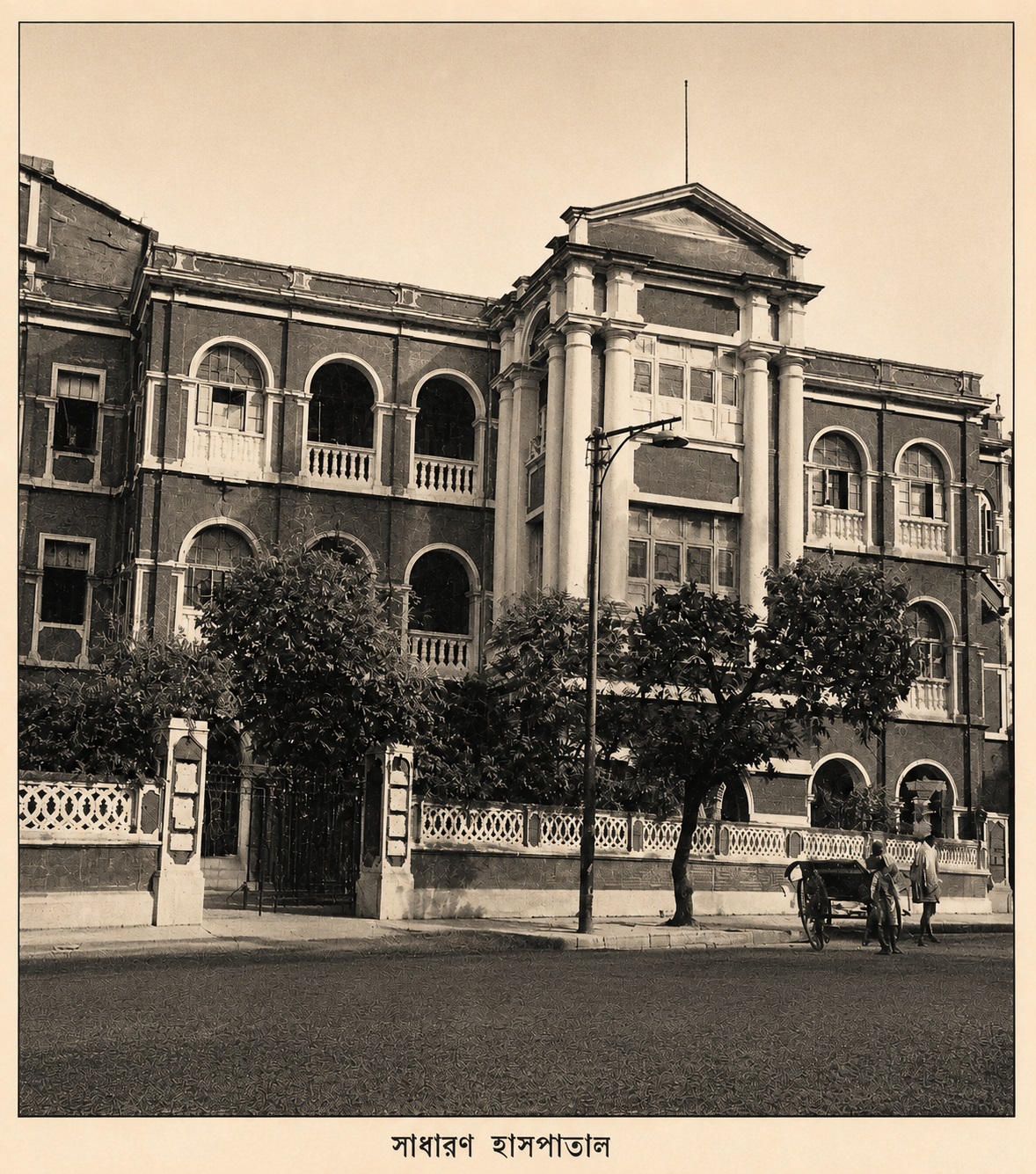
Raja Dinendra Street · 1964Main institutionPatipukur · 1964Associated hospital
Commemorative record · 1964Institutional retrospectiveRashtrapati Bhavan · 21 August 1964President Radhakrishnan's message
A forty-eight-year transformation
What began in a rented house in 1916 had become a government medical college and hospital.
The transfer did not end the institution's history. It changed the framework through which
Ray's educational and clinical project would continue.
Next era1964–Present
Government administration, continuing teaching and clinical work, research, centenary,
and the institution's place in contemporary Ayurveda.
06
1964–Present
Public Legacy
State administration opened a new phase in the institution's history. Teaching, clinical
service,
research, and public recognition continued across the following decades, carrying Ray's
original
experiment into its second century.
1964 onward
Government administration
A new framework for continuity
After the transfer to the Government of West Bengal, the institution continued as a
public
Ayurvedic medical college and teaching hospital.
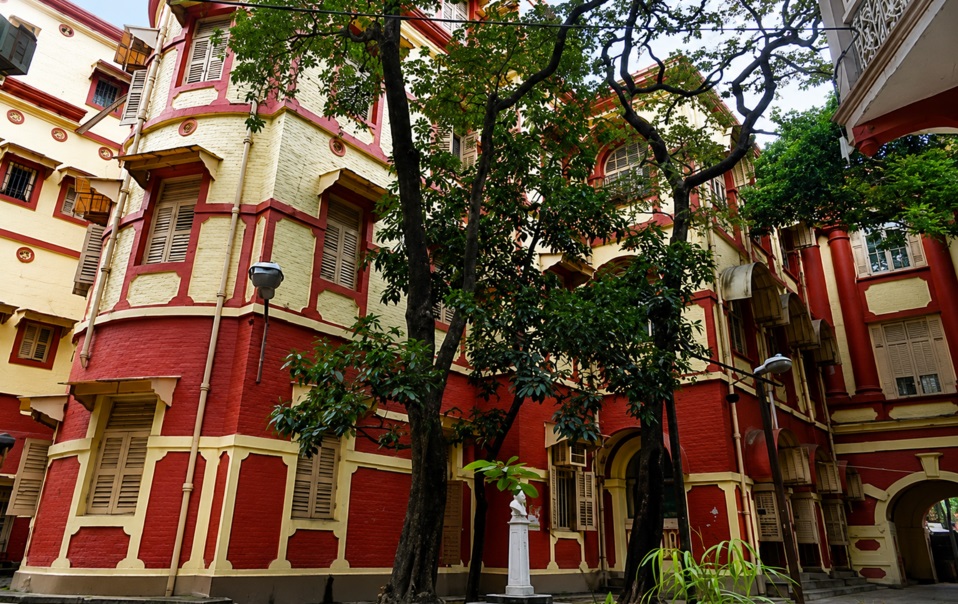
Its principal academic and clinical centre remained at Raja Dinendra Street, while
Patipukur
continued as an associated hospital campus.
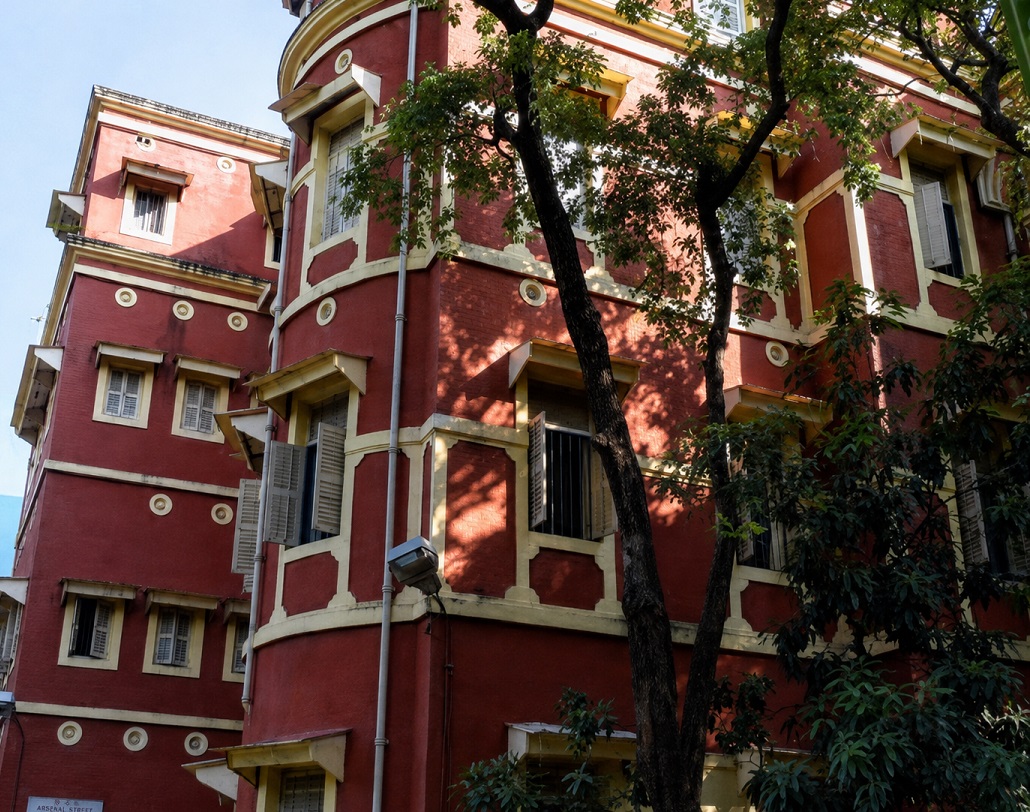
Present-day campusJ. B. Roy State Ayurvedic Medical College and Hospital
Research continuity
Tuberculosis returns as a research subject
A study published in the Journal of Ayurveda and Integrative Medicine investigated
adjunct Ayurvedic therapy alongside anti-tubercular drugs in the management of pulmonary
tuberculosis and included researchers affiliated with J. B. Roy State Ayurvedic Medical
College and Hospital.
2015–16
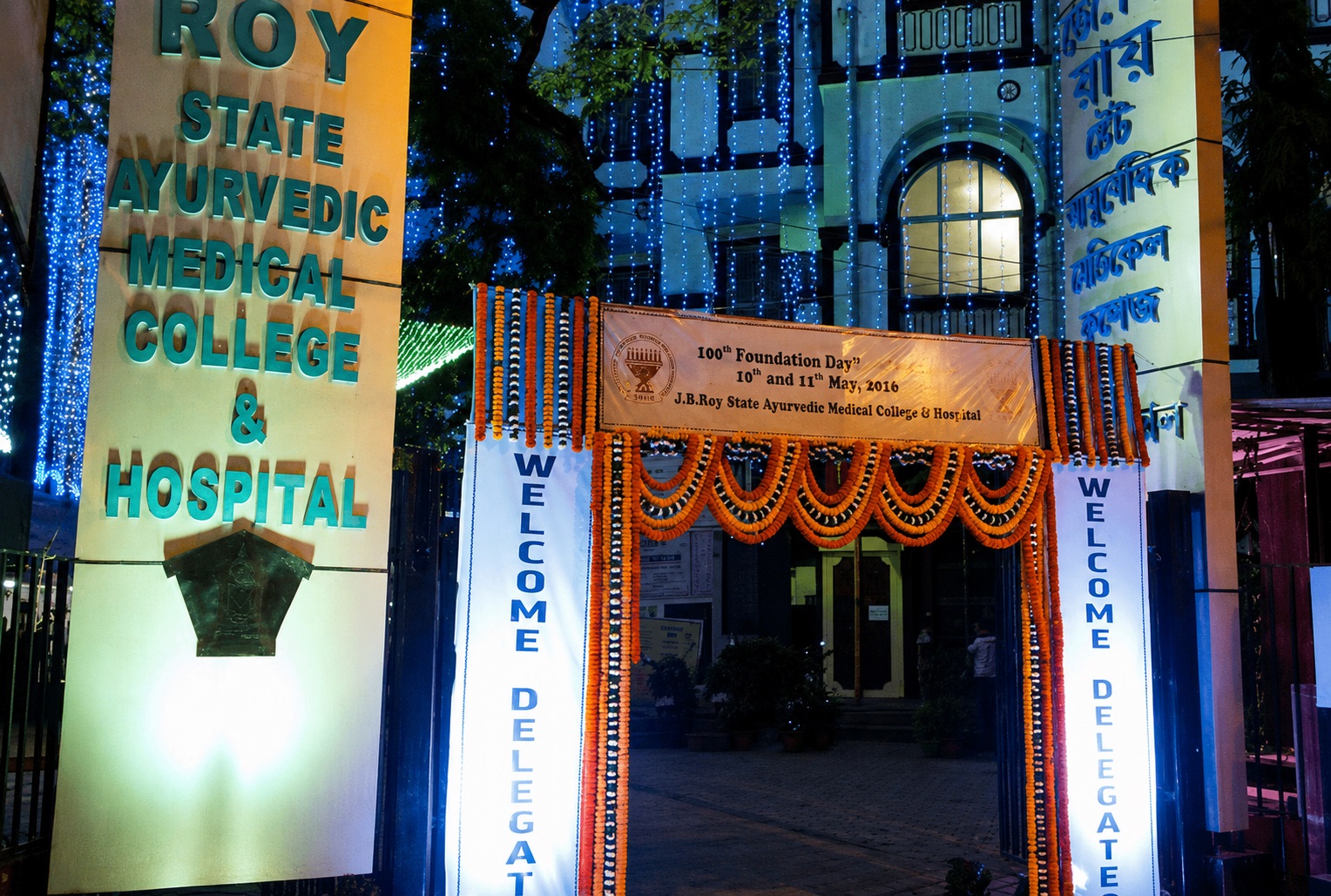
One hundred years
The institution reaches its centenary
The centenary programme marked a century since Ray founded Ashtanga Ayurveda Vidyalaya in
1916.
The anniversary linked the modern government institution explicitly to its founder and to
the
major milestones of its early history.
Centenary · 2015–2016A century of institutional continuity
The year-long programme included an international seminar at Science City, Kolkata,
in February 2016.
Present
Living institution
Teaching, hospitals, research, and remembrance
The institution continues as a public Ayurvedic medical college and teaching hospital,
with academic instruction organised through fourteen departments and clinical activity
centred on the Raja Dinendra Street and Patipukur campuses.
Its work now encompasses undergraduate medical education, inpatient and outpatient care,
clinical research, public-health activity, and externally supported projects.
InstitutionA working medical college and hospitalMemoryJamini Bhushan Ray commemorated at the institution he founded
1916 → Present
The experiment became an institution.
A rented house with twelve students became a public medical college, teaching hospital,
research centre, and enduring part of Ayurvedic education in Bengal.