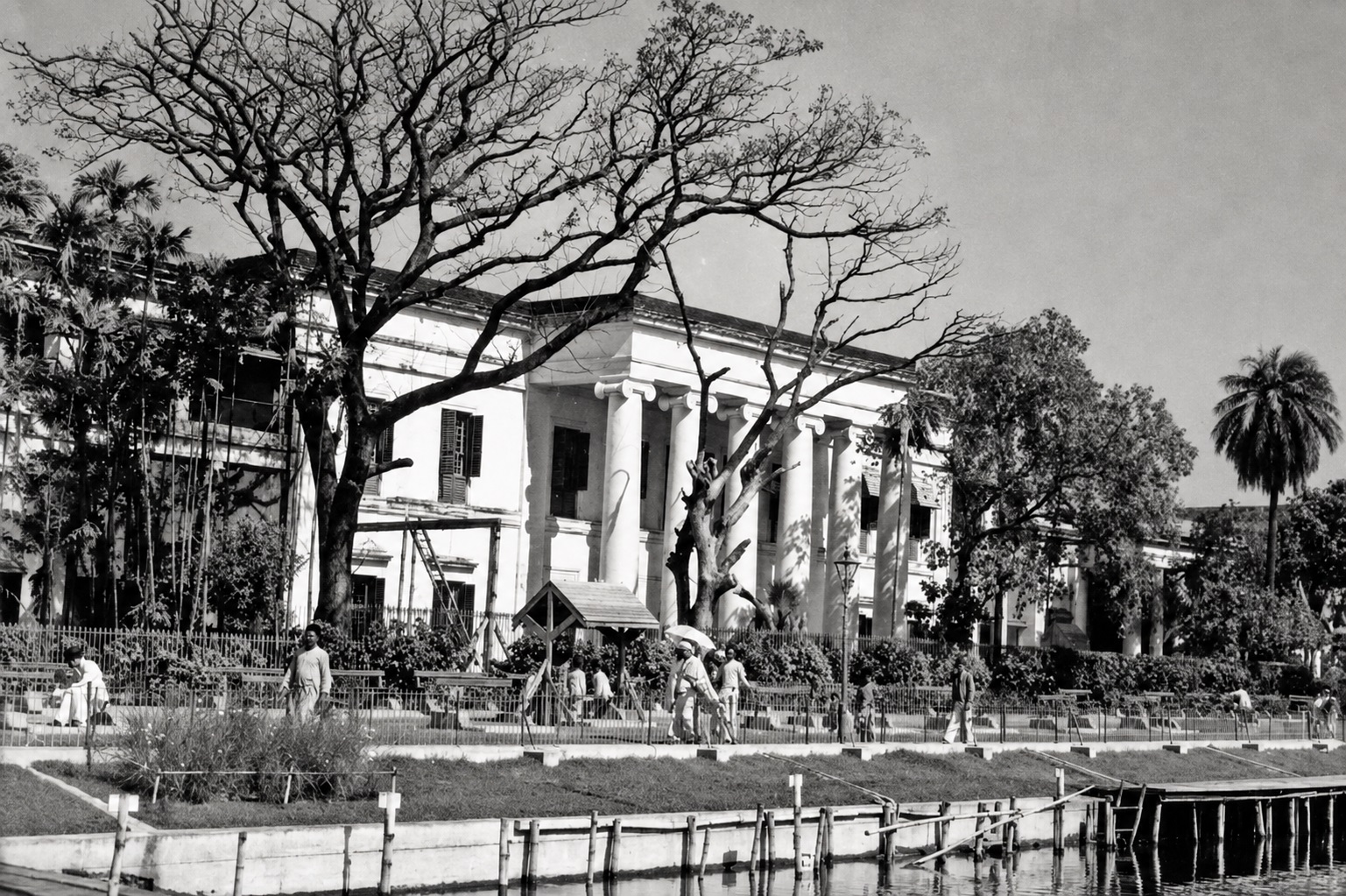
Classical scholarship
Sanskrit College
Ray earned a B.A. and later an M.A. in Sanskrit. His training in classical texts remained fundamental to his approach to Ayurvedic medicine and medical education.
Biography gallery · 1879–1926
Jamini Bhushan Ray was an Ayurvedic physician, Sanskrit scholar, medical graduate, educator, philanthropist, and institution-builder whose work helped reshape the public and educational life of Ayurveda in Bengal.
Chapter 01 · 1879–1905
Ray’s education brought together three worlds that would remain central to his later work: family-based Ayurvedic learning, classical Sanskrit scholarship, and Western medical training.
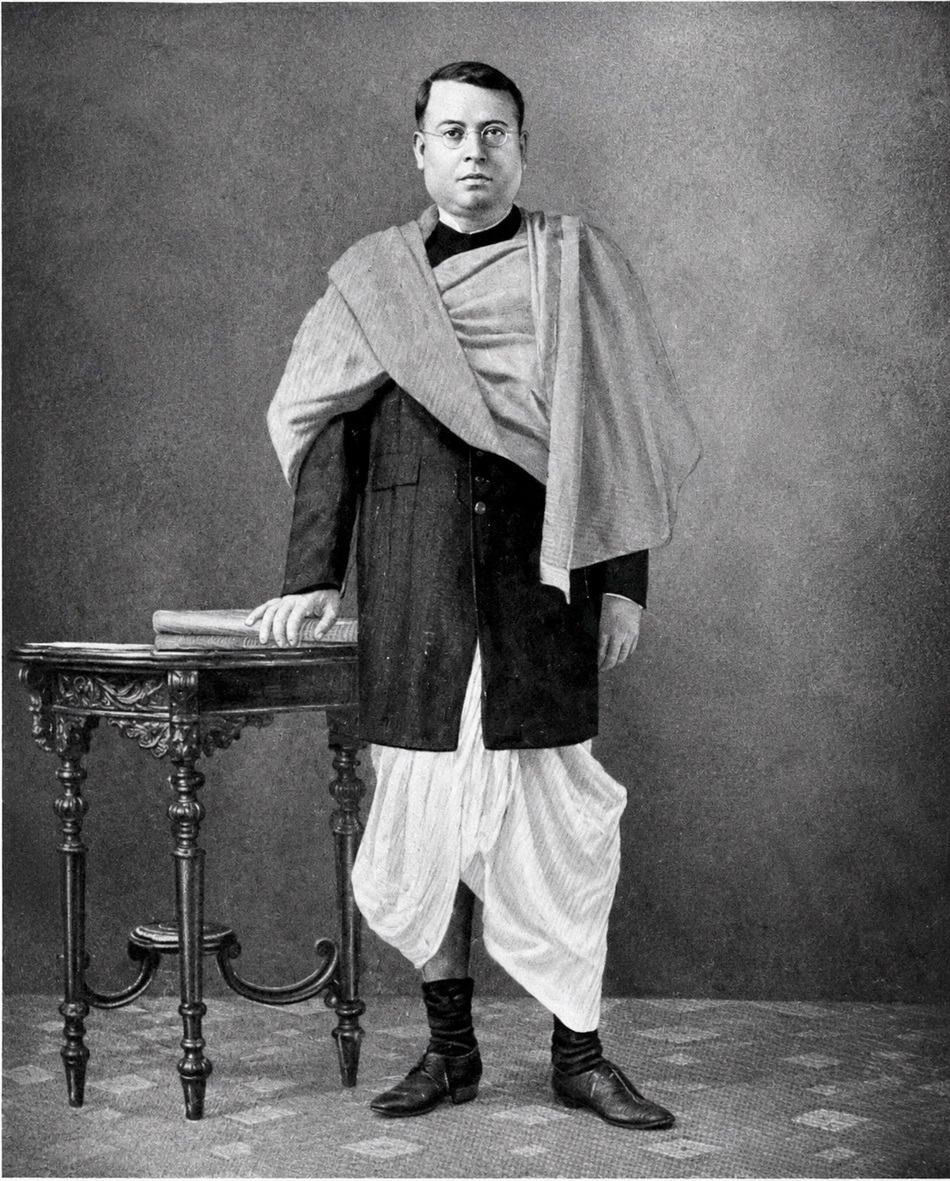
Biographical record
Ray was born on 1 July 1879 in Poyogram village in Khulna district, then part of the Bengal Presidency. His father, Panchanan Ray, was an Ayurvedic physician known by the honorific title Kavichintamani.
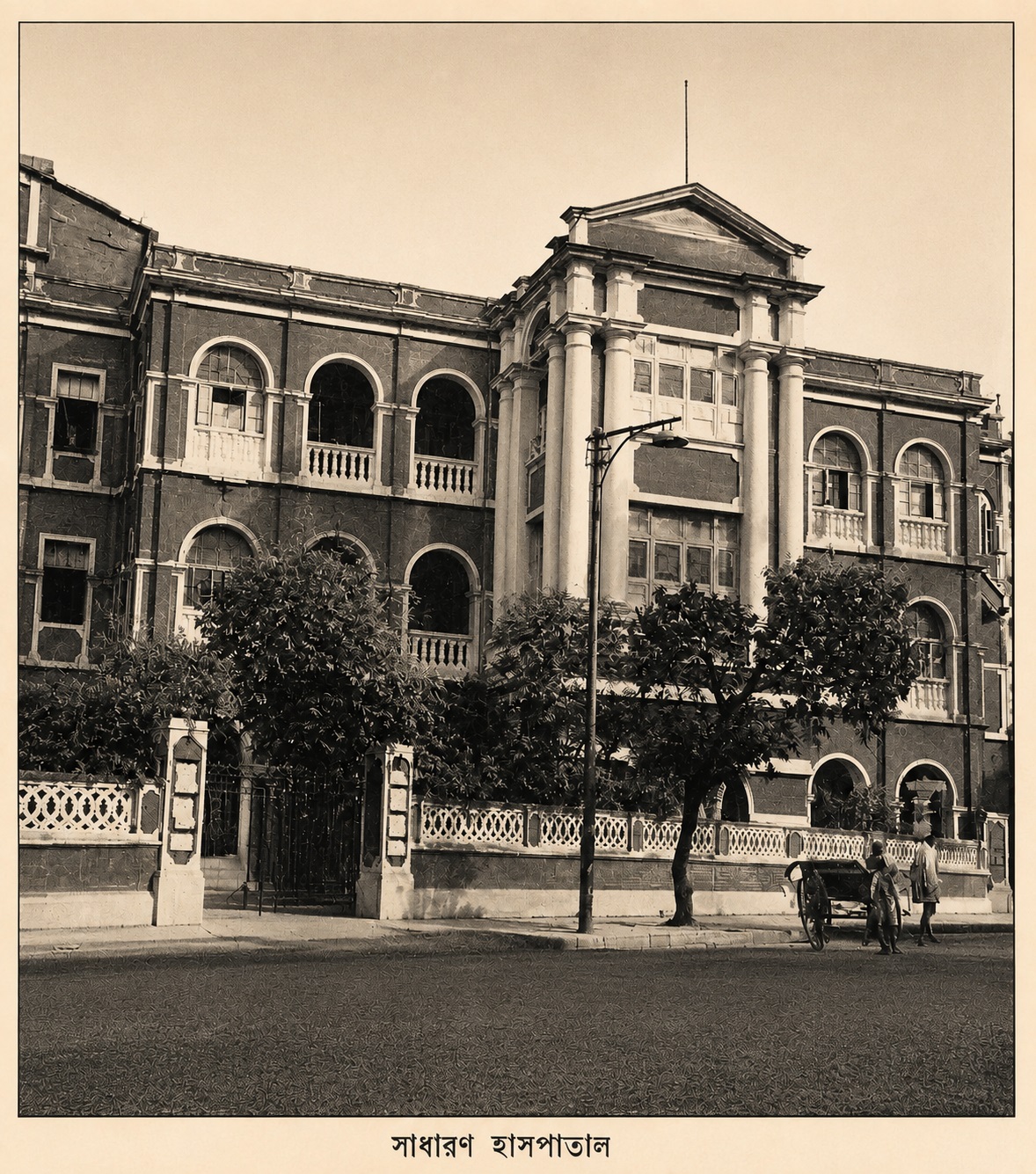
After his early education in Bengal, Ray moved to Calcutta and attended South Suburban School in Bhowanipore. He later studied at Sanskrit College while also pursuing medical training at Calcutta Medical College and continuing his Ayurvedic studies under his father.
He completed an M.A. in Sanskrit and graduated with the M.B. degree in 1905, receiving a gold medal. This unusually broad formation placed him at the intersection of classical scholarship, Ayurveda, and Western medicine.
Places of learning
Sanskrit College and Calcutta Medical College represented different systems of knowledge, but Ray’s later career drew continuously on both.
Classical scholarship
Ray earned a B.A. and later an M.A. in Sanskrit. His training in classical texts remained fundamental to his approach to Ayurvedic medicine and medical education.
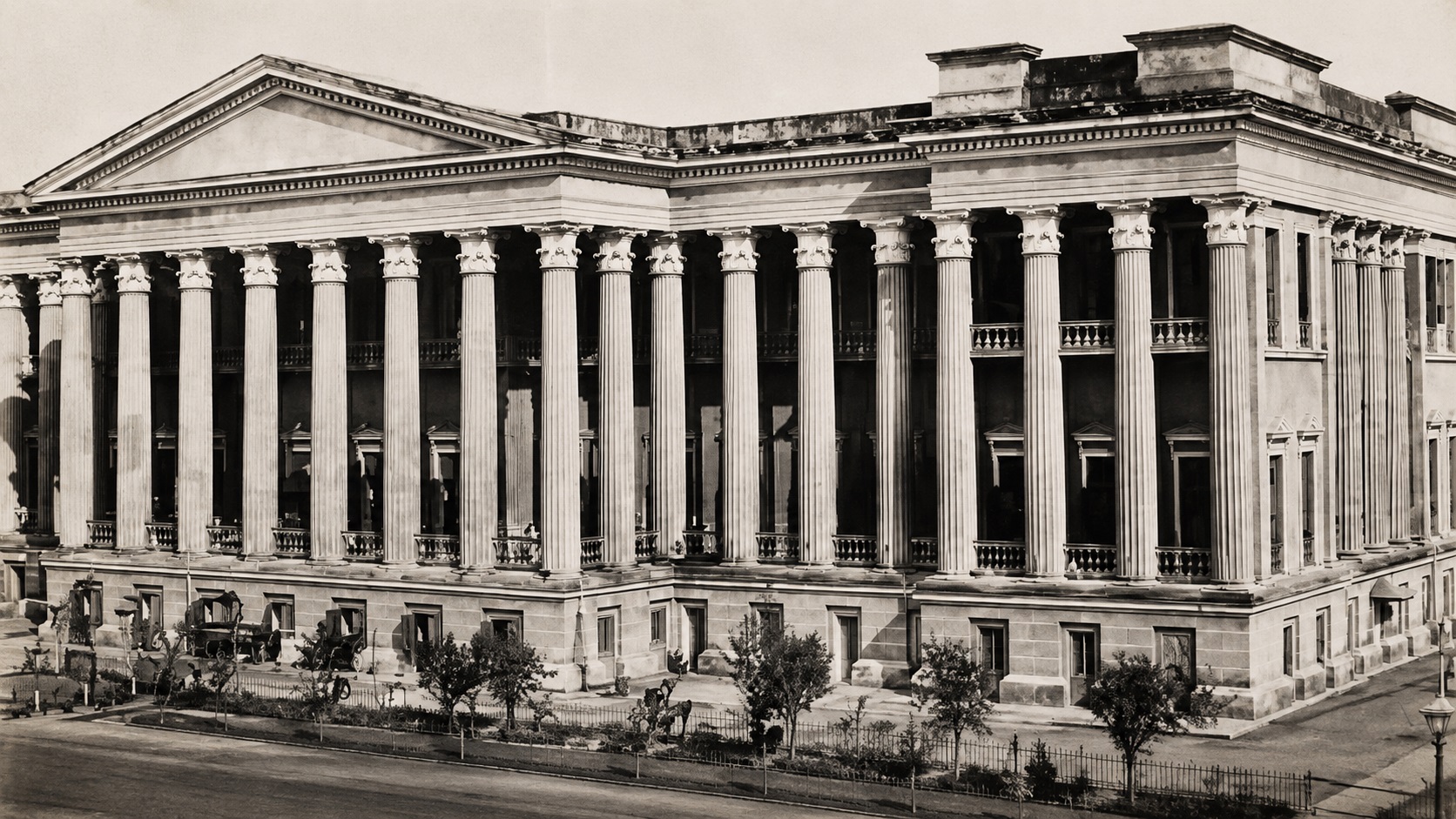
Western medical training
Ray simultaneously pursued formal medical studies, graduating M.B. in 1905. He first practised obstetrics and gynaecology before turning fully to Ayurveda.
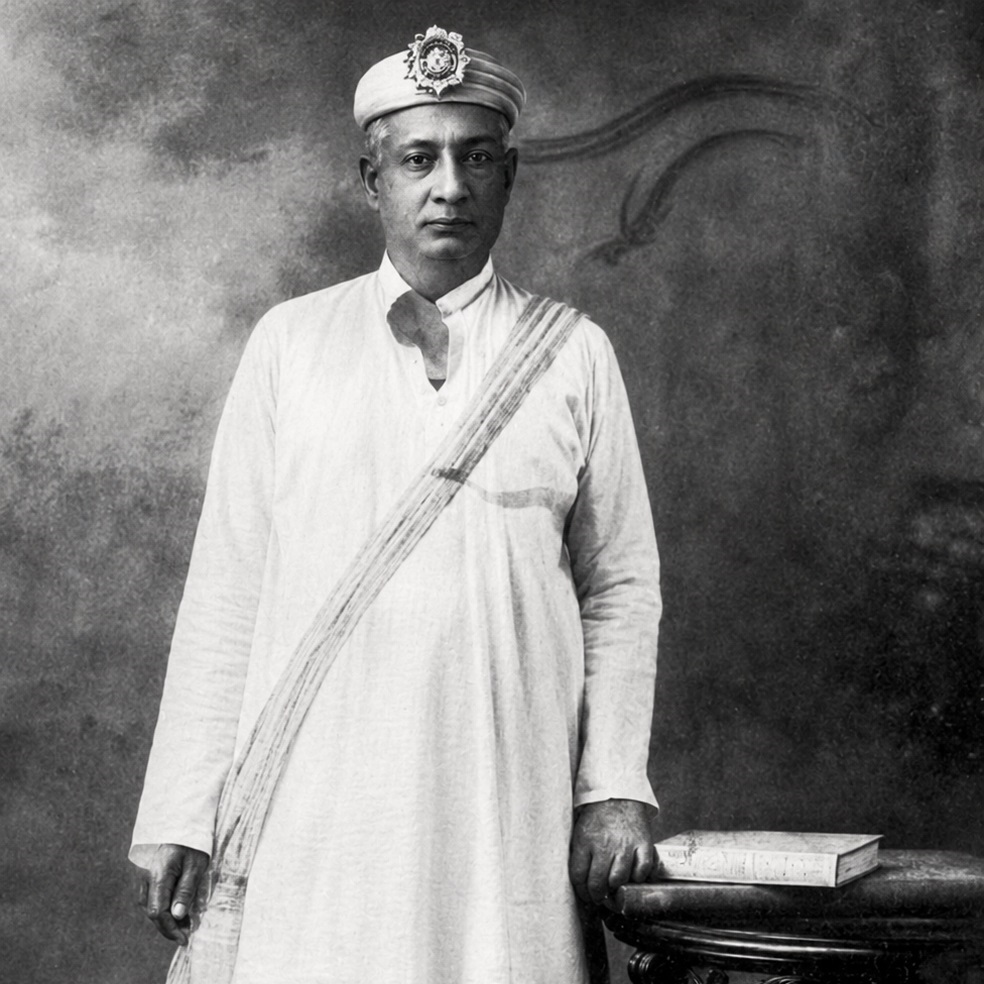
Parallel Apprenticeship
Alongside his university education, Ray continued to study Ayurveda under his father and later completed further Ayurvedic training under Mahamahopadhyay Bijoy Ratna Sen.
The combination of textual learning, clinical medicine, and traditional apprenticeship would become the foundation of his later educational programme.
According to family recollection, Ray’s regard for his teacher extended into his family life: he named his first-born son, Bijoy Bhushan Ray, after Mahamahopadhyay Bijoy Ratna Sen.
Chapter 02 · Choosing Ayurveda
Ray possessed the qualifications to pursue a conventional Western medical career, but instead chose to devote himself to Ayurveda at a time when many Western-trained physicians regarded indigenous medicine as professionally inferior.
His decision met resistance from family and ridicule from classmates. Yet the choice was not a rejection of modern medicine. Rather, Ray increasingly sought to apply the discipline of formal education, clinical organisation, publication, and institutional life to Ayurveda.
Early professional path
The story continues
The next chapters trace Ray’s national role in Ayurvedic reform, the founding of Ashtanga Ayurveda College, his publications, Gandhi’s 1925 foundation-stone laying ceremony, and the institutional legacy that still survives him a century after his death.
At 46 Beadon Street in Calcutta, Ray established the Vaidyaraj Pharmacy to prepare and distribute Ayurvedic medicines using more systematic methods of production and quality control.
The pharmacy formed part of his wider effort to standardise Ayurvedic practice and make medicines more widely available; preparations were also supplied free of charge to poor patients.
Chapter 03 · 1915–1916
Ray’s work extended beyond clinical practice and teaching into the national movement to organise, reform, and strengthen Ayurvedic medicine.
National leadership
Ray presided over the Seventh All India Ayurvedic Conference, held in Madras in December 1915. The gathering brought together Ayurvedic physicians and reformers concerned with the future of indigenous medicine in India.
In his presidential address, Ray advocated organised Ayurvedic education, systematic clinical work, research, and stronger institutional foundations for the profession. His programme reflected the same combination of scholarship, medical training, and institution-building that characterised his work in Bengal.
The conference proceedings were subsequently reported in The Behar Herald on 1 April 1916, preserving a contemporary record of Ray’s role in the wider Ayurvedic movement.
Chapter 04 · 1916–1919
Ray’s reform programme took permanent institutional form in 1916 with the creation of Ashtanga Ayurveda Vidyalaya, an experiment in organised Ayurvedic education, clinical training, and public service.
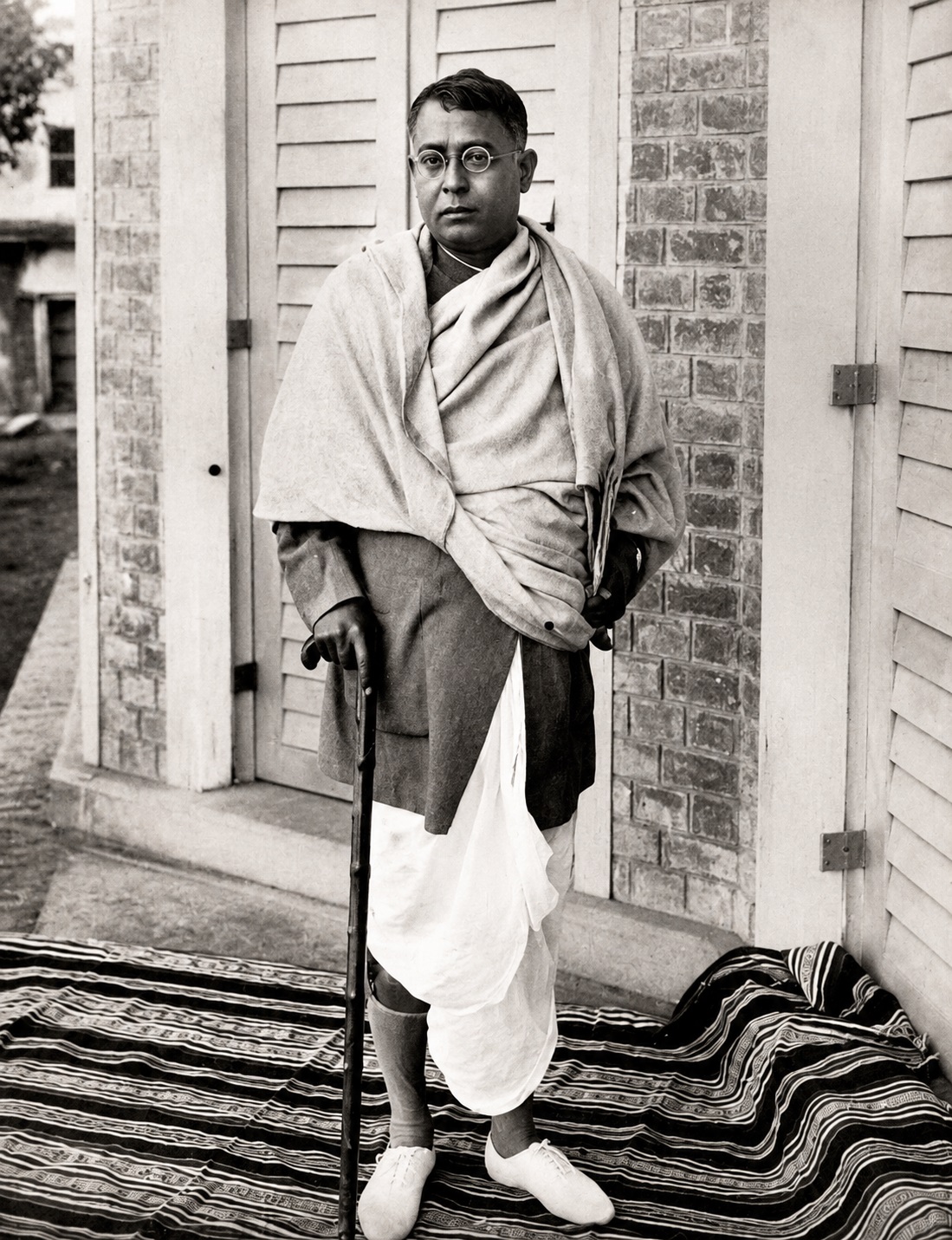
Ashtanga Ayurveda Vidyalaya
The institution was formally inaugurated on 14 April 1916 (1 Baishakh 1323 BS) in a rented house at 29 Fariapukur Street in north Calcutta. It opened with twelve students and three teachers.
Tuition, board, and lodging were provided free of charge, reflecting Ray’s view that Ayurvedic education should be accessible rather than confined to hereditary or private systems of instruction.
Ray sought to replace the limitations of the traditional guru–shishya model with organised teaching by specialist instructors, practical clinical training, and an attached hospital. Ayurvedic physicians and Western-trained doctors both participated in the teaching programme.
Ashtanga Ayurveda Vidyalaya opened at 29 Fariapukur Street.
The college began on a deliberately small and closely taught scale.
Specialist instruction formed the basis of the new educational model.
The institution was reorganised under a public trust, with Ray continuing as Principal.
Chapter 05 · Scholar and author
Ray’s programme of reform extended to the printed word. His books, textbooks, and editorial work helped place Ayurvedic knowledge within a more systematic culture of teaching, reference, and scholarly exchange.
Medical scholarship
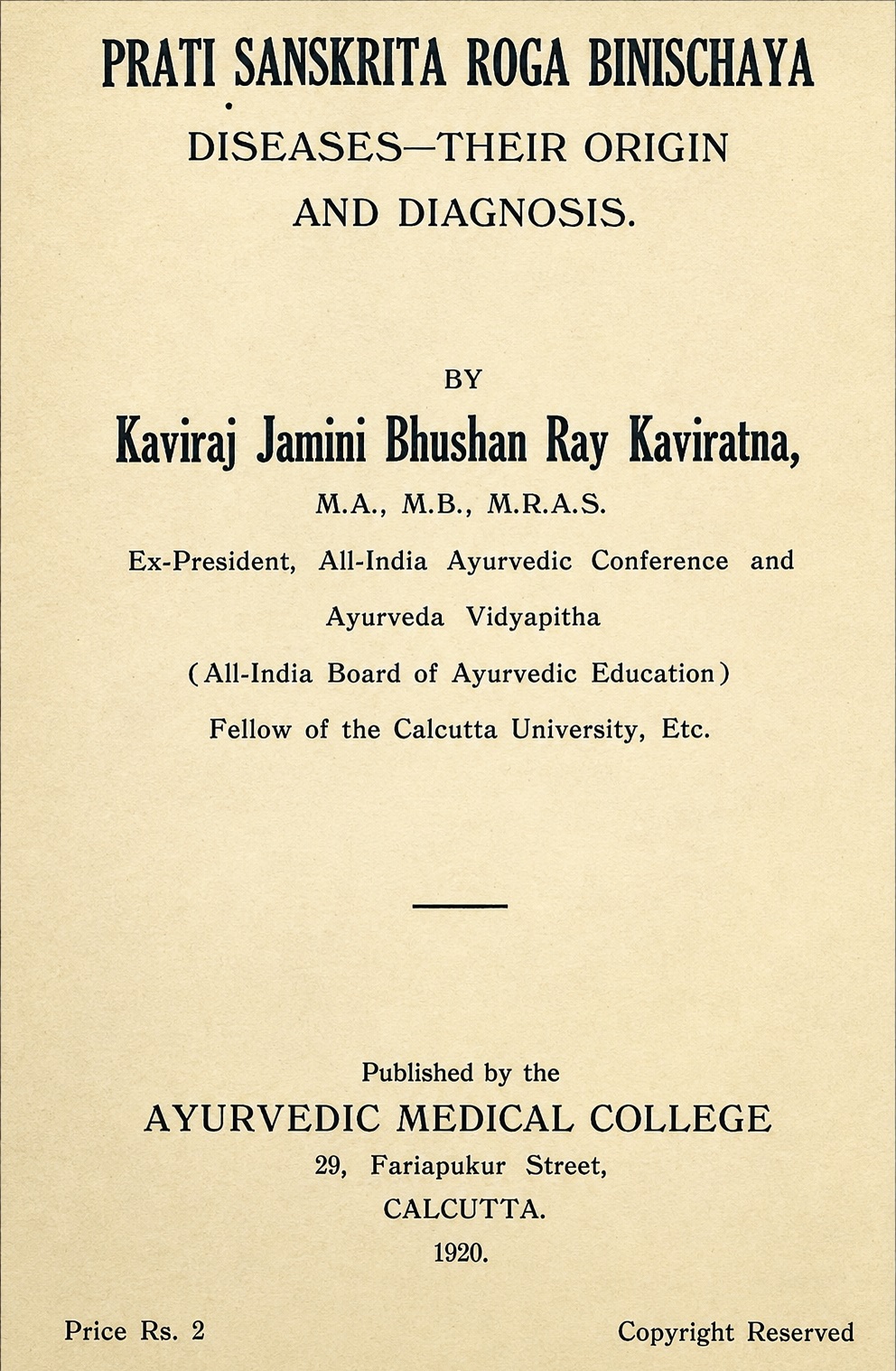
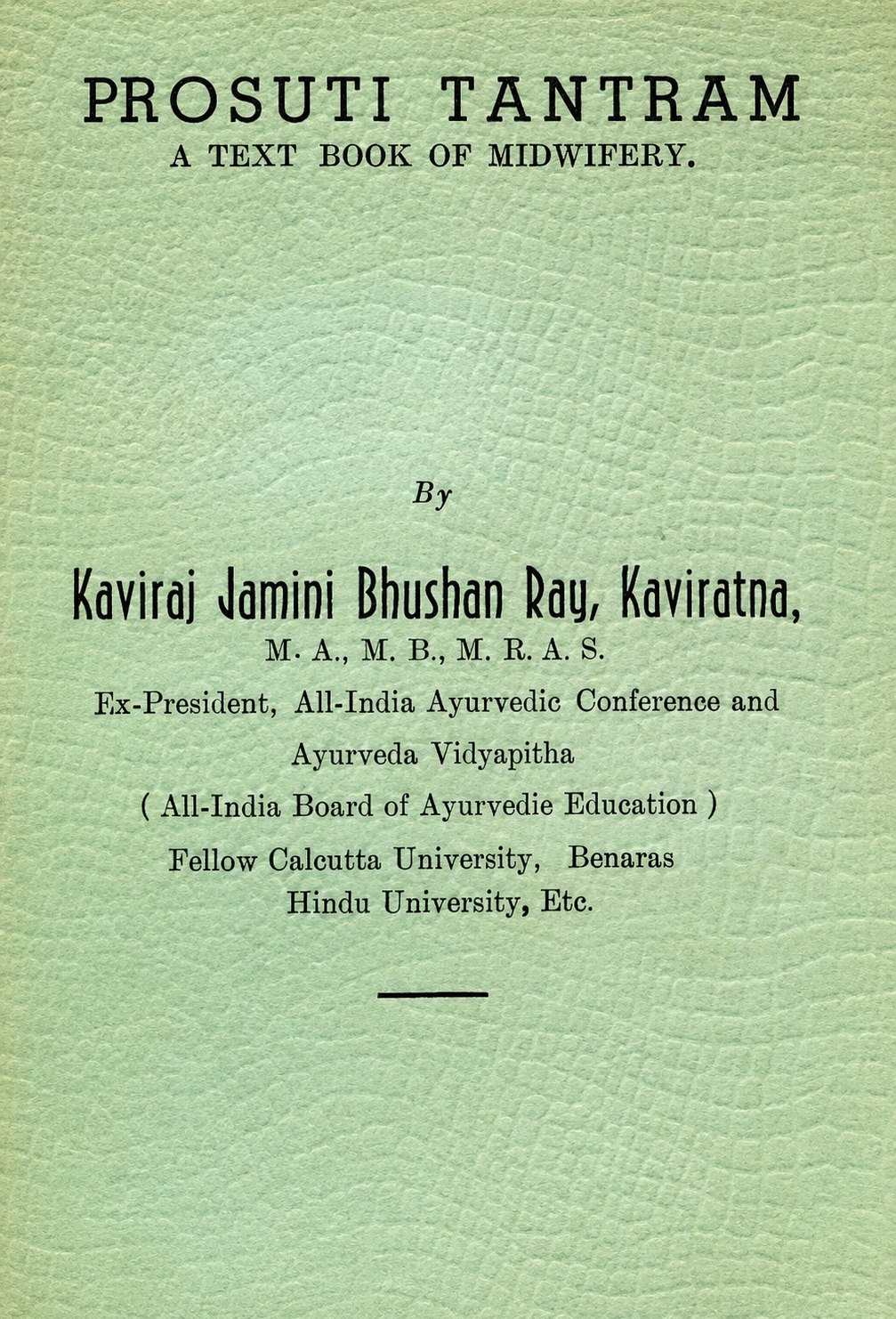
Ray wrote across several branches of Ayurvedic medicine, including diagnosis, obstetrics, paediatrics, toxicology, and diseases of the ear, nose, throat, and mouth.
A 1923 committee report listed five of his Sanskrit works among Ayurvedic texts then commonly used as textbooks: Roga Vinischaya, Kumaratantram, Vishatantram, Prasutitantram, and Shalakyatantram.
He also founded and edited the Bengali monthly journal Ayurveda, extending his educational programme beyond the classroom and hospital into regular scholarly publication.
Chapter 06 · 6 May 1925
The institution entered a new public phase when Mahatma Gandhi laid the foundation stone of its permanent Raja Dinendra Street campus and used the occasion to speak frankly about medicine, ethics, scientific inquiry, and public service.
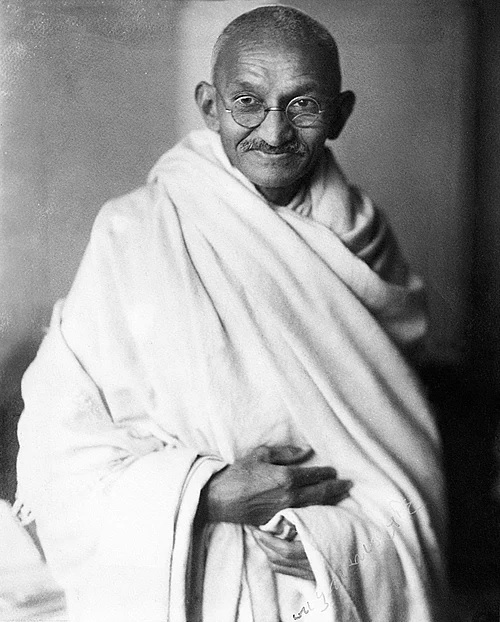
Foundation stone ceremony
Gandhi laid the foundation stone of the new Ashtanga Ayurveda Vidyalaya building on Raja Dinendra Street in Calcutta on 6 May 1925.
His presence represented significant public recognition for the institution Ray had built, but Gandhi did not offer an uncritical endorsement of indigenous medicine.
In his address he called for humility, honesty, scientific inquiry, and higher ethical standards among practitioners of Ayurveda and Unani medicine. He criticised exaggerated claims and commercialism while distinguishing those concerns from the value of the medical traditions themselves.
Chapter 07 · Philanthropy
Ray’s philanthropy was closely tied to institution-building. Education, medical care, property, and future clinical facilities formed parts of the same long-term programme rather than isolated acts of charity.
Institutional philanthropy
The free tuition, board, and lodging provided to the first students of Ashtanga Ayurveda Vidyalaya already reflected Ray’s belief that access to medical education should not depend solely upon personal means.
According to the Samsad Bangali Charitabhidhan, Ray donated Rs. 200,000 to the college one day before his death on 11 August 1926.
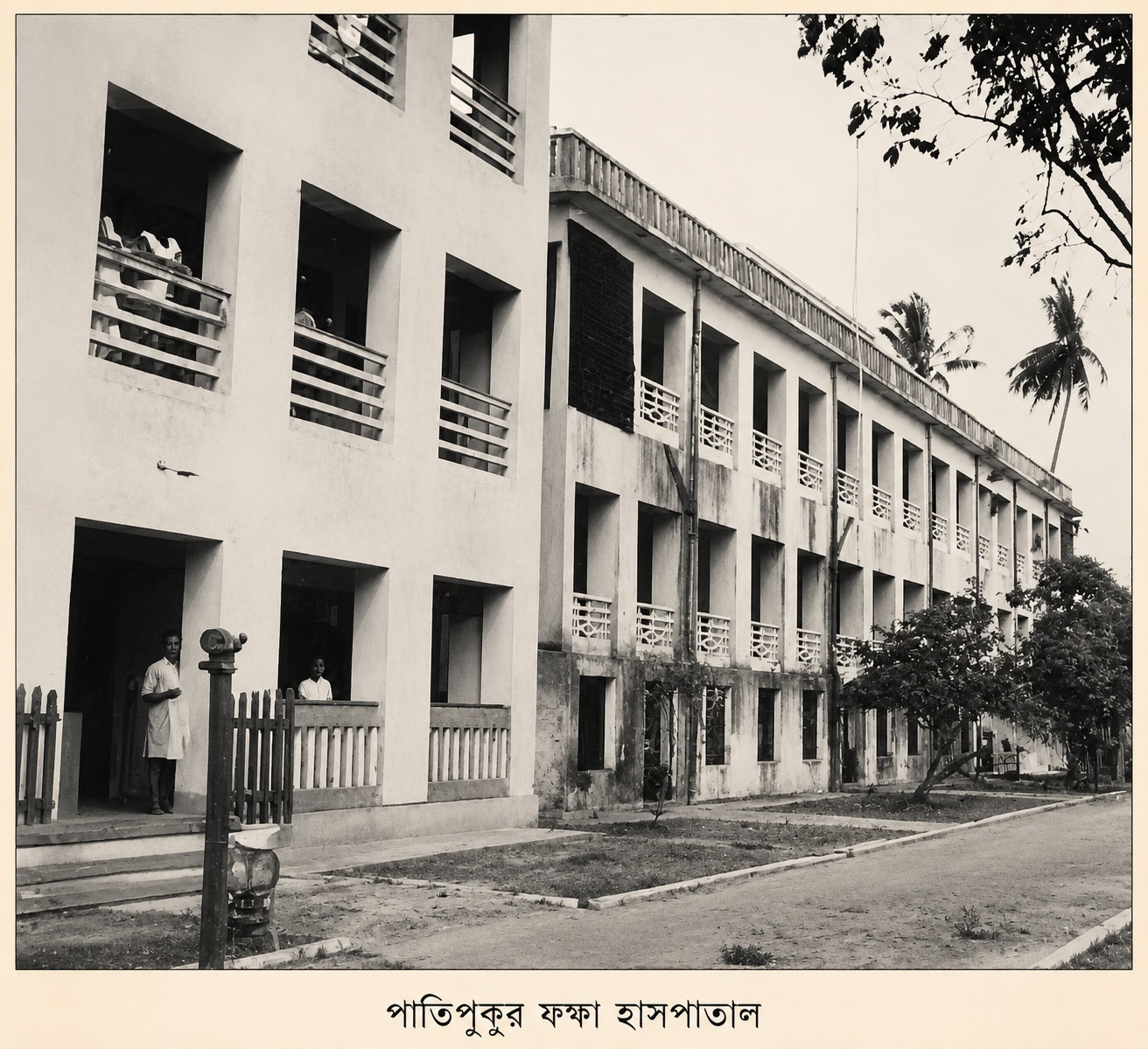
His philanthropy also extended beyond the college itself. Property at Patipukur that Ray bequeathed to his institution later became the site of a tuberculosis hospital established after his death.
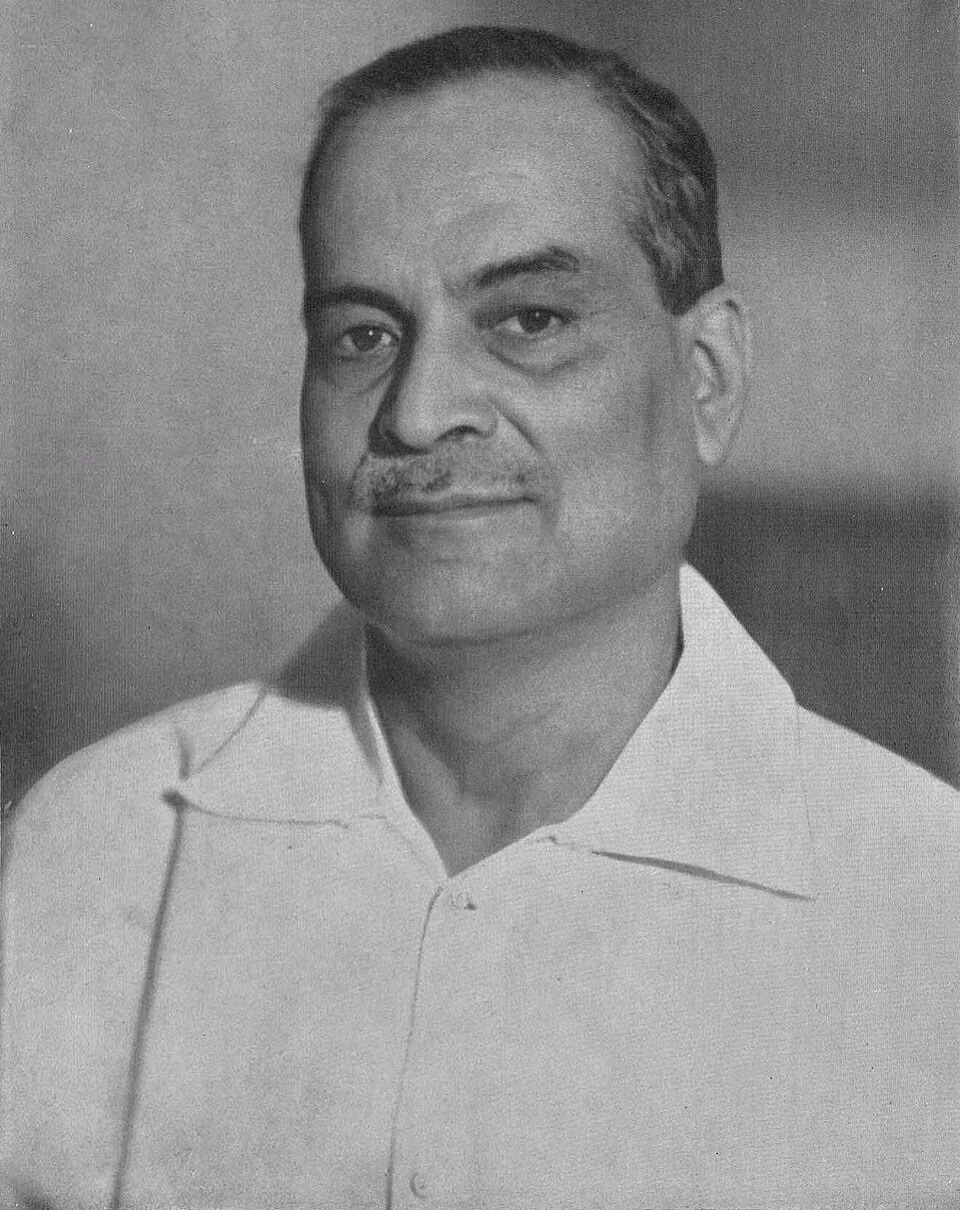
The hospital began as a 60-bed tuberculosis facility. Its foundation stone was laid by physician and statesman Dr. Bidhan Chandra Roy, and Ray’s son Amar Bhushan Ray later served as its superintendent.
In 1951, a new three-storey hospital building was inaugurated by the Governor of West Bengal, Harendra Coomar Mookerjee, marking a further stage in the expansion of the Patipukur hospital.
The facility was later reorganised as Patipukur Ayurvedic Hospital and continues as an annexed clinical campus of the institution Ray founded. The hospital now has 94 beds and provides both inpatient and outpatient Ayurvedic services.
Chapter 08 · Legacy
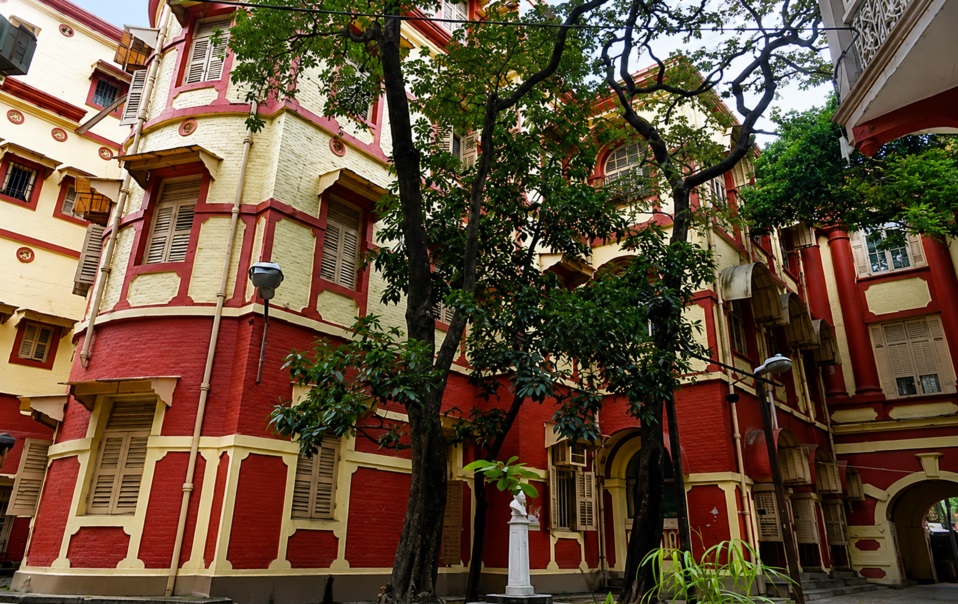
Ray died in Calcutta on 11 August 1926, before the permanent campus he had planned was completed. Yet the institution, educational programme, publications, and philanthropic structures he created continued to develop long after his death.
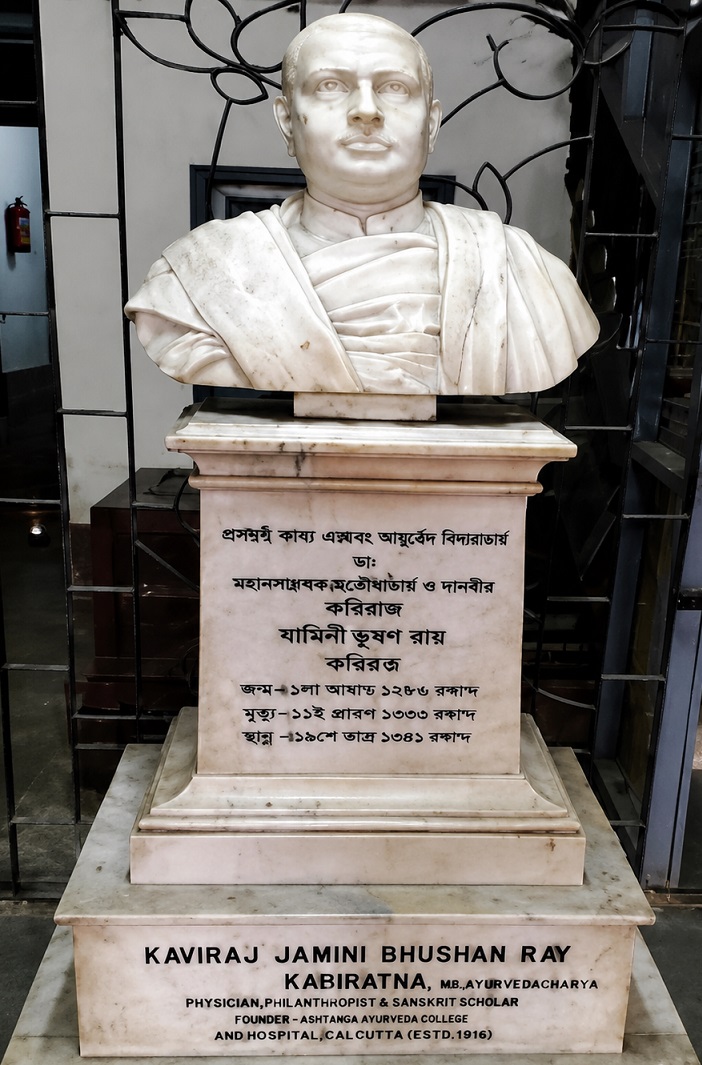
A life translated into institutions
Ray’s legacy lies not in a single achievement but in the combination of medical education, clinical service, scholarship, publication, philanthropy, and institution-building that he brought together around Ayurveda.
The college, hospital facilities, books, archival record, and later commemorations preserve different parts of that legacy. Taken together, they show how a professional choice made in the early twentieth century developed into institutions that continued beyond his lifetime.